
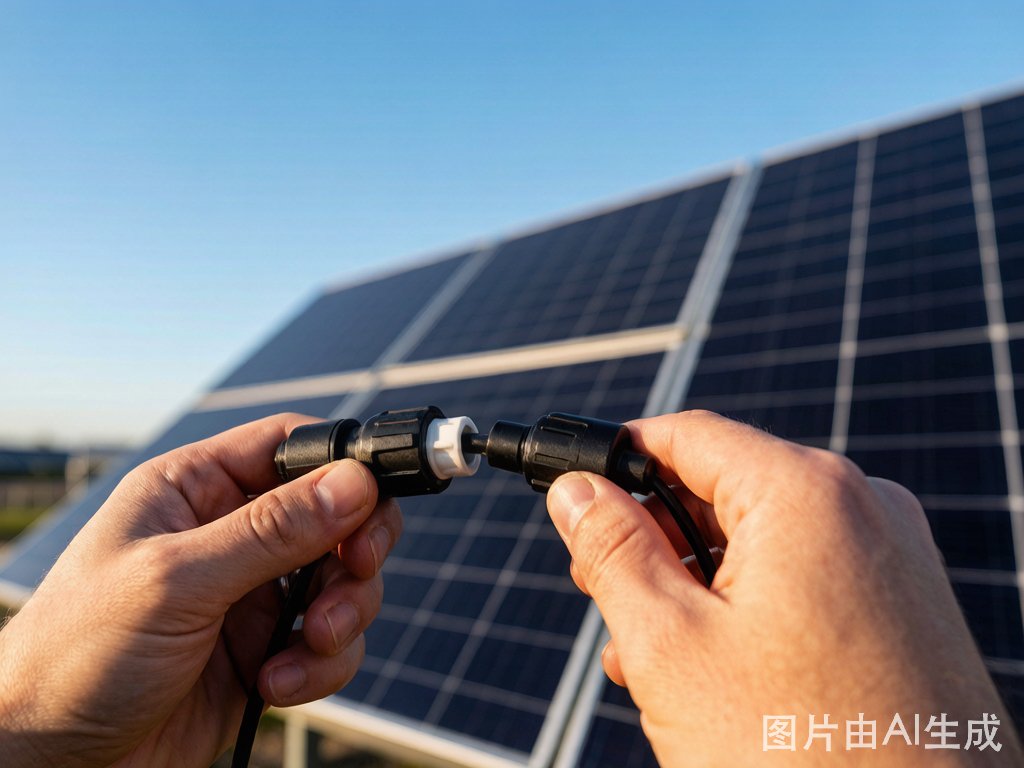
If you've been installing solar for a while, you know the drill. Connectors seem like a small detail — until one fails and takes half a string with it. I still remember the first time I saw a melted MC4 on a rooftop in Arizona. The installer had used some no-name connector that looked fine on the outside. Inside? The contact resistance was so high it basically turned into a tiny heater.
So let's walk through what actually matters when you're picking connectors. No marketing fluff — just the stuff that bites you in the field.
A lot of connectors claim 30A or 50A on the datasheet. Great. But here's the thing — that rating is usually tested under ideal lab conditions with perfect termination. In the real world, with a slightly imperfect crimp or a bit of oxidation, things get hot fast.
Rule of thumb I've learned: pick a connector rated at least 25% above your string's maximum current. Running 20A strings? Get connectors rated for 30A minimum. The extra headroom costs pennies and saves you from that 3 AM service call.
Treasun's MC4-compatible connectors come in 30A, 50A, and even 60A variants — and yes, those numbers are TÜV-verified, not marketing math.
This is the spec nobody looks at, and it's the one that matters most. A quality connector should have contact resistance below 0.5 milliohms. Above 1 milliohm, you're generating measurable heat at full load. Above 2 milliohms, you're looking at a failure waiting to happen.
Here's a quick field test: after crimping a connector, run the string at full load for 30 minutes, then hit the connector body with an IR thermometer. If it's more than 15°C above ambient, something's wrong — either the crimp, the contact, or the connector itself.
IP67 means the connector can survive temporary immersion. IP68 means it can handle continuous immersion under pressure. For rooftop installations, IP67 is usually fine. But if you're doing ground-mount in a flood-prone area, or floating solar, you want IP68.
One thing that trips people up: the IP rating is only as good as the mating. A perfectly good IP68 connector mated to an IP67 one gives you IP67 at best. Don't mix and match across brands — we'll get to that.
I'd estimate 80% of connector failures I've seen trace back to poor crimping. Wrong die, wrong pressure, wrong strip length. The crimp is where the electrical connection actually happens, and if it's not gas-tight, oxidation creeps in.
Invest in a proper crimping tool with the right die set. Treasun's connectors are designed for standard 2.5mm², 4mm², and 6mm² cable sizes, and they work with most professional crimping tools. If you're using generic pliers, stop. Seriously.
TÜV certification (IEC 62852) is the gold standard for PV connectors sold in Europe and much of Asia. UL 6703 is the equivalent for North America. A connector that has both is ideal, but at minimum, make sure it has the one required for your market.
Here's a red flag: connectors that claim "TÜV-compatible" or "TÜV-standard" without an actual TÜV certificate number. If they can't show you the certificate, walk away. Treasun's MC4 connectors carry genuine TÜV Rheinland certification — you can verify the certificate on TÜV's website.
Connectors sit outside for 25+ years. The plastic housing needs to handle UV radiation without becoming brittle, and the sealing ring needs to survive temperature swings from -40°C to +90°C without cracking.
Look for PPO (polyphenylene oxide) housing material — it's what the good manufacturers use. Cheaper connectors use nylon, which degrades much faster under UV. Treasun uses PPO across their entire connector range, rated for 25+ years of outdoor exposure.
"Compatible with MC4" is probably the most abused phrase in solar. The original MC4 patent expired years ago, so now everyone can make connectors with the same physical form factor. But physical fit doesn't mean electrical compatibility.
Different manufacturers use slightly different contact geometries, different plating thicknesses, different spring tensions. When you mix Brand A's male with Brand B's female, you might get a connection that works for a year and then develops hot spots.
The safest approach: stick with one brand for the entire installation. If you must mix, test the mated pair at full current and monitor the temperature before commissioning.
Connectors might be the cheapest component per unit in a PV system, but they're also one of the most common failure points. Spending an extra few cents per connector on a certified, properly specced product is the cheapest insurance you'll ever buy for a solar installation.
Got questions about connector selection for your project? Get in touch — our engineering team deals with this stuff every day.